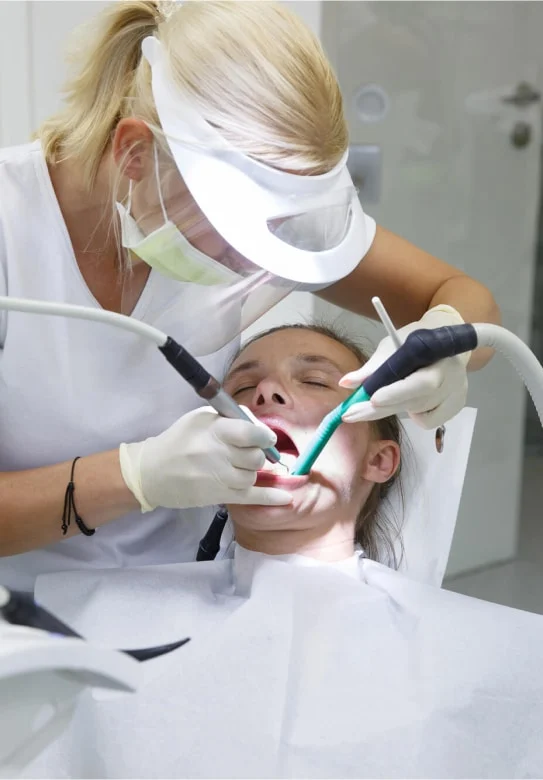
While some people may believe that most dental procedures require the same level of experience, there are actually many separate areas of dentistry that require a specialist. There are multiple conditions and illnesses that require the experience of an Endodontic surgeon instead of a general dentist. When a nonsurgical root canal or other procedure is not enough for treatment, Endodontic surgery may be the better solution.
An endodontist will mainly use endodontic surgery when non-surgical procedure are not enough or when the fracture is small enough that they are not visible on X-rays. In other cases, endodontic surgery may also be necessary to remove calcium deposits in root canals. While the tooth can seem fairly normal on the surface, there can be an infection or other health issue underneath that is causing more problems.
There are cases in which an individual has a small fracture or canal that a dentist cannot notice on the X-ray. With endodontic surgery, the endodontist will be able to examine the entire root of the tooth and treat the problem.
There is also a process known as calcification, in which calcium deposits form around the root and make the canal too narrow for a non-surgical root canal. In these cases, an endodontist will need to use surgery to clean the tooth and then re-seal it. Since each part of the tooth affects each other and the other components of the mouth, it is crucial to seek professional care.
In some patients who receive a non-surgical root canal from a general dentist, there is a chance that the root will not heal properly and cause an infection to form. When this happens, it is crucial to seek endodontic surgery from a professional endodontist. If you do not treat the tooth soon, you will feel intense pain that makes daily tasks nearly impossible. People may go months or years after a root canal without any problems and suddenly have the pain strike.
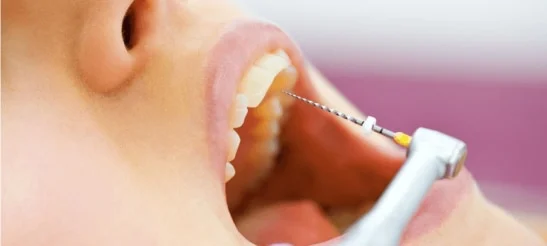
A common procedure that endodontists perform on a regular basis is known as the apicoectomy. During this procedure, the endodontist opens the gum tissue by the tooth and examines the underlying bone. If necessary, the endodontist will remove any inflamed or infected tissue along with the end of the root. The endodontist may need to then place a small filling at the end of the root canal along with a few stitches or sutures to help the tissue heal properly.
After completing this procedure, the bone will naturally heal around the end of the root over the next few months following the procedure. Since this is only one type of endodontic surgery, it is important to ask all questions during the consultation in order to fully understand your specific situation. The other procedures are all designed to help save the tooth and prevent having to extract it entirely.
If you have any concerns about feeling pain during the surgery, do not worry. While you may feel some swelling and soreness following the procedure, there will not be much of any pain. In fact, the anesthesia will wear off and you will most likely be able to drive yourself home from the appointment.
However, be sure to clarify with the endodontist if it is alright for you to drive yourself or if you need to have someone else drive you. In most cases, it is best to take the remainder of the day to relax. While many people return to normal routines the next day, your endodontist will be able to go over the best course of action during the appointment.
If you are in pain following general dental procedures and are unsure of why, see an endodontist as soon as possible. An endodontist can ensure the pain goes away and the teeth remain in good health.
Combining Advanced Techniques and a Passion for Excellence, Dr. Adam Kwiatkowski Delivers Premier Care in Cosmetic and Implant Dentistry While Ensuring Patient Comfort Through IV Sedation Certification in Colorado.

Dr. Adam Kwiatkowski is a highly skilled cosmetic and implant dentist, driven by a passion for excellence. He began his journey at the University of Illinois at Chicago College of Dentistry, where he earned several accolades, including the International Congress of Oral Implantologists’ Pre-doctoral Student Achievement Award. His education continued with UIC’s Advanced Predoctoral Implant Program, and he was inducted into the prestigious Omicron Kappa Upsilon National Dental Honor Society.
Committed to staying at the forefront of dental innovation, Dr. Kwiatkowski regularly takes advanced Continuing Education courses. He is an active member of various professional organizations such as the ADA, AGD, CDA, and the American Academy of Implant Dentistry (AAID), and is working toward fellowships with both the AAID and the American Academy of Cosmetic Dentistry (AACD). He is also pursuing Diplomate status with the American Board of Oral Implantology. Additionally, he is certified in IV sedation in Colorado to ensure patient comfort.
Search for services, dental procedures, and expert tips from our patient resources.
Popular searches: Dental Implants, Cleanings, Insurance.
Take this 60-seconds quiz to see if dental implants are right for you!